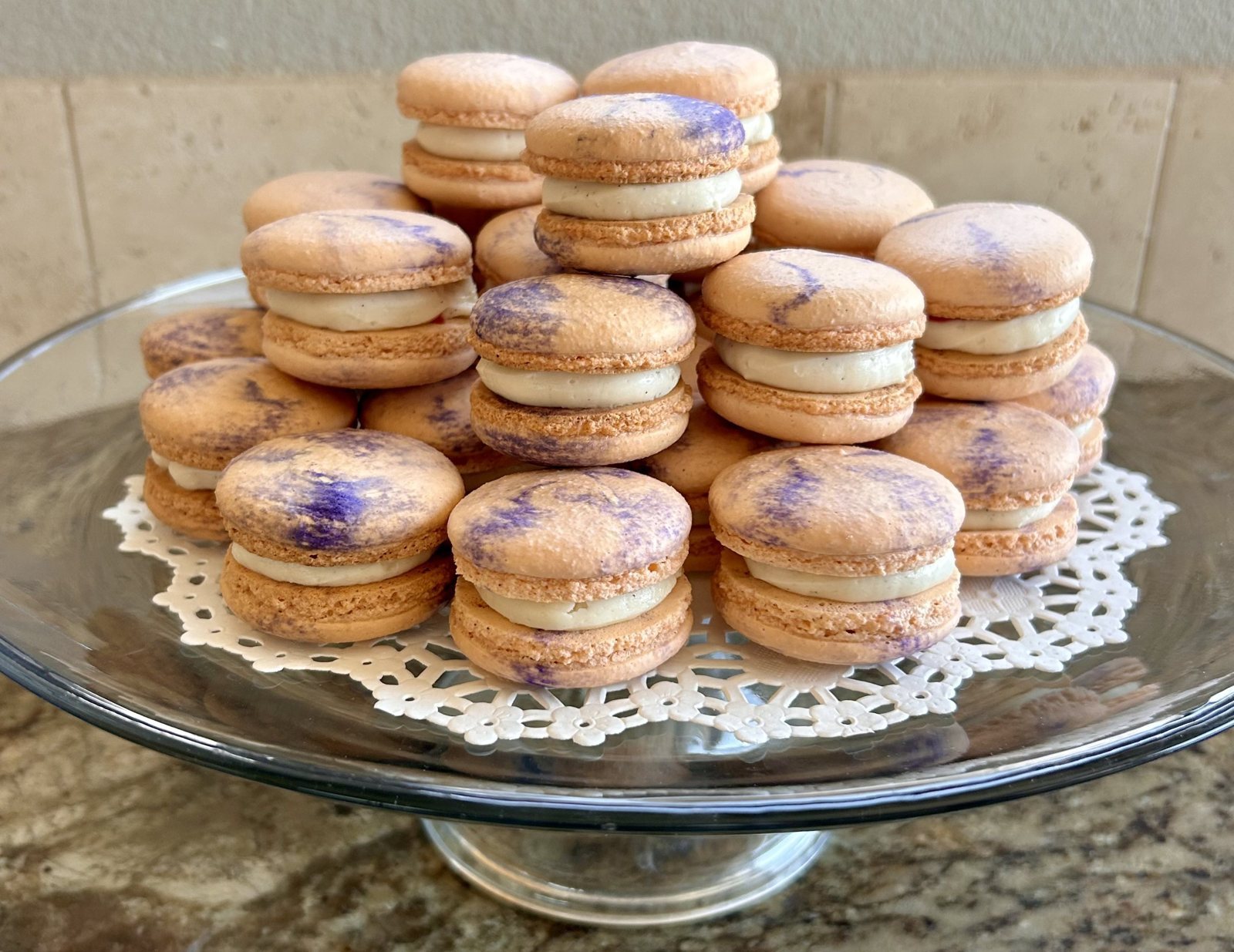
The art of baking a macaron was one I desired to master from the time I was twelve. It was the same year I was given a stand mixer for my birthday, and perhaps the same year in which French macarons began to sweep the nation as the newest, most chic cookie. Composed of rather basic ingredients: egg whites, almond flour, and powdered sugar, this treat presents a number of challenges that were rather stumping for a young teen.
These treats can be overmixed, undermixed, baked too long, too short, too lumpy, not viscous enough, and on and on! Not to mention the aesthetic of the cookie is paramount. Ideally, a macaron has a shiny, smooth top, with a foot. The foot is the thin frilled edge from which the dome should rise, and without it, the treat cannot properly be dubbed a macaron, though you could call it a dacquoise…
As though these guidelines for the perfect macaron weren’t daunting enough, there are numerous methods through which the macaron can be made. The meringue which is eventually folded into the sifted almond flour and sugar can be made the French, Italian, or Swiss way. These varying meringues are defined by how the sugar is introduced to the eggs. For French, granulated sugar is slowly spooned into the whipped egg whites until it grows shiny and stiff. The Italian method uses a boiling sugar syrup in lieu of the dry sugar. And finally, the Swiss meringue takes place in a bain marie, and it is above the simmering water where the egg whites mixed with sugar are whipped.
Baking is a science, they say, and so I was eager to perfect my macaron technique until it was no mere matter of luck, I wanted each batch to result in a perfect set of macarons. I began with the directions of Joanne Chang, the owner of Flour Bakery. Her recipe in her cookbook, Flour, served as my guide. She adopted the French meringue method to make her macarons, and the macarons came out well. Perhaps a bit lumpy, a tad uneven, but still a reliable recipe. At the time, I was advised to rely on silicone mats and molds to create the perfect macaron, and here was my first deviation from recommendations.
Do not use silicone mats for macarons.
The mats make it difficult for the heat of a metal baking sheet to properly heat the piped shells. The even heat, namely from the base of the pan, is crucial for the skin atop the shells to gather enough steam for the shell to both puff upwards, while also creating enough tension for the batter to push outwards, making the perfect foot.
Even though Joanne Chang’s recipe was good, I felt as though it could be better. I began experimenting with various recipes online, trying the Italian and Swiss methods, and I came across an interesting discovery. While most French macaron recipes with a French meringue use three egg whites for all the moisture, there were recipes utilizing Italian meringues which used six egg whites. The ratio of flour was slightly higher in the latter recipes, but not enough to warrant doubling the number of eggs. I was skeptical of course, but I tried it.
Three egg whites are mixed directly into the dry flour, while the other three are whipped with a bubbling sugar syrup, then folded into the paste made from the first step. The resulting batter was silky, smooth. And when the macarons were piped, the mix spread and settled into a smooth dollop. I attempted to test the Swiss method, where the ingredient ratio was the same as the French, but the placement of the outlets in my house neglected to allow me to whip the mixture as vigorously as needed on the stove top. I abandoned the Swiss meringue and returned to the Italian, and once my piped macarons dried, which certainly took longer than the French method (given the doubled liquid), I began baking them.
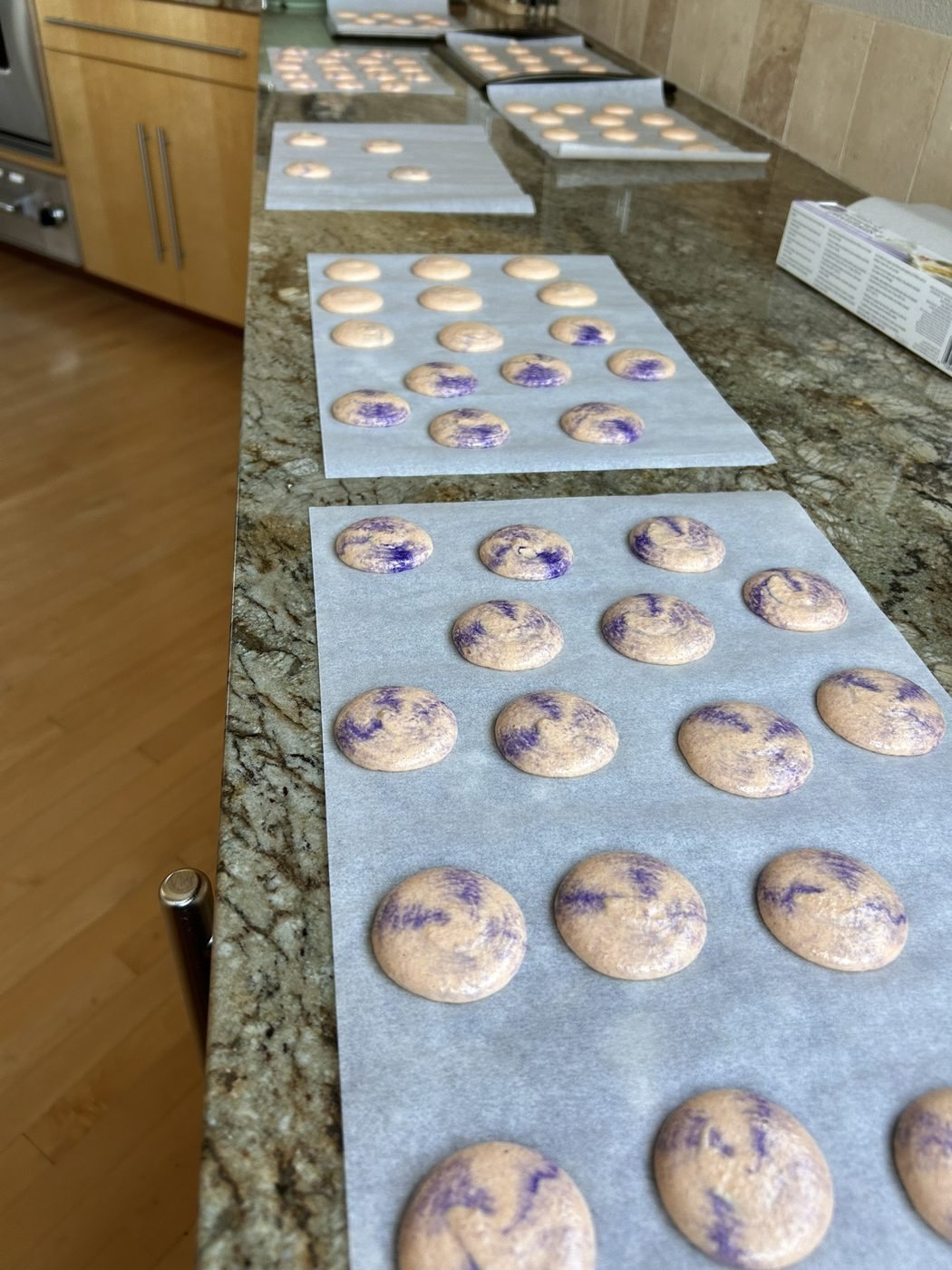
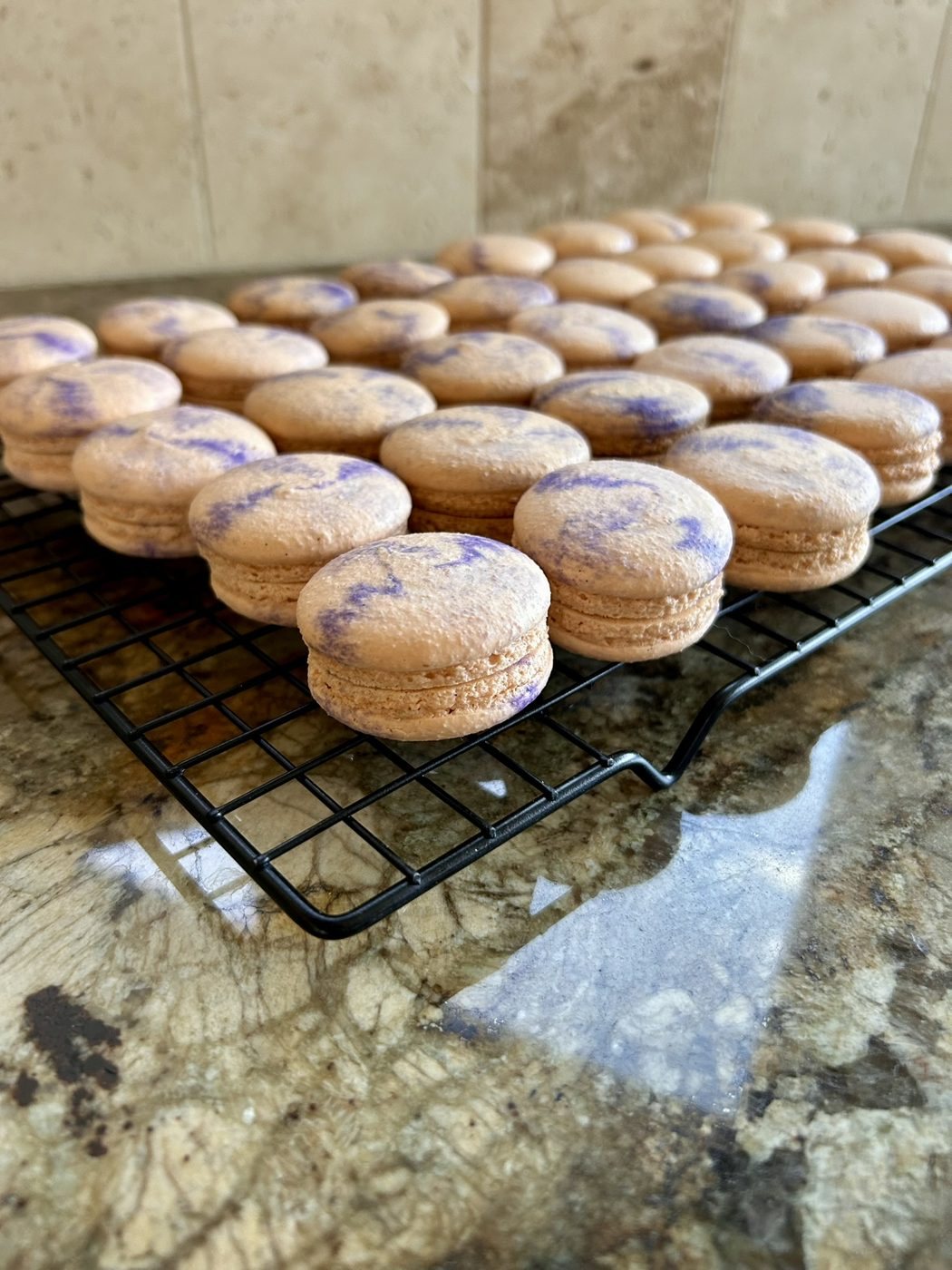
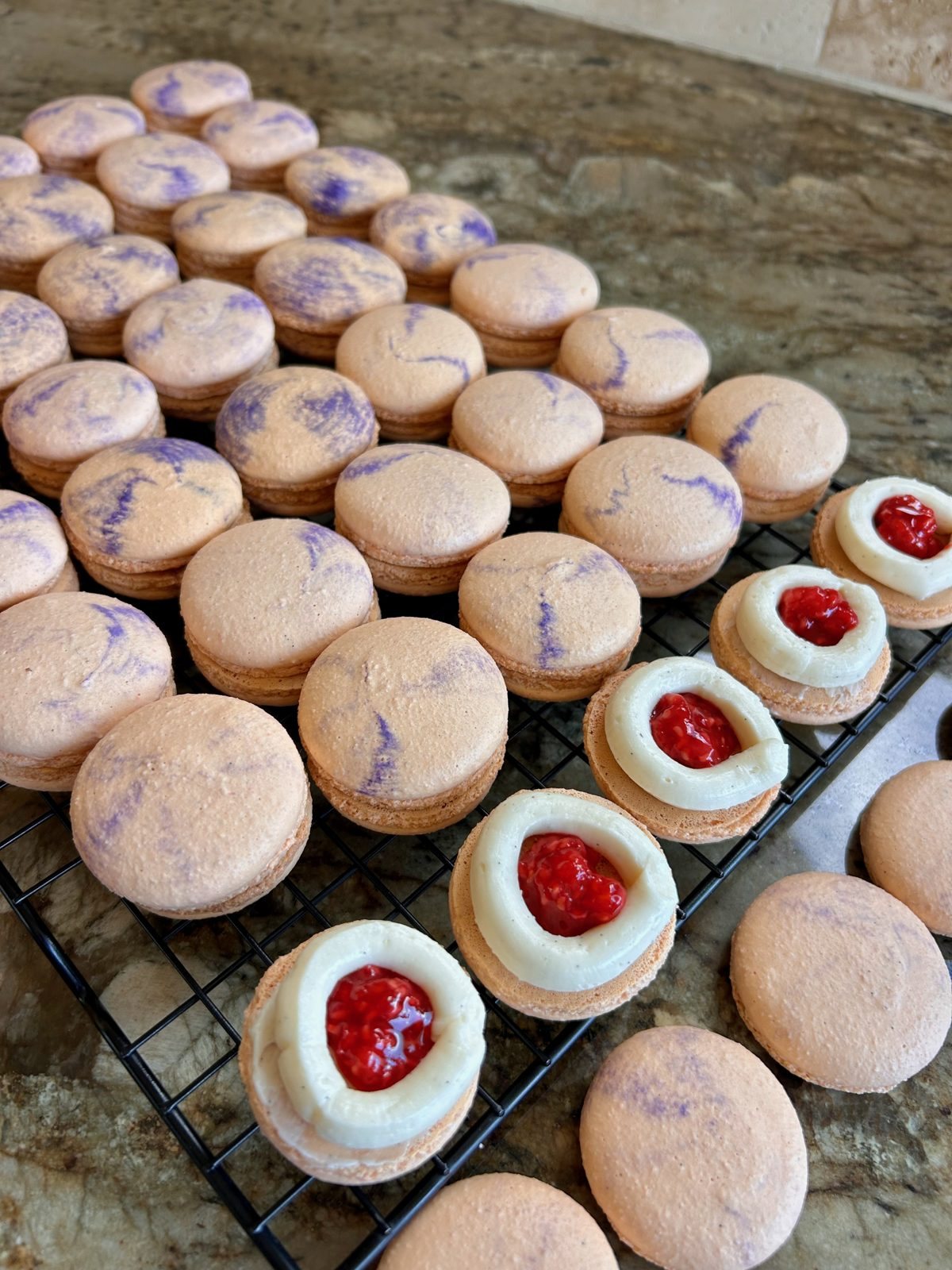
The mixture not only yielded more macarons, but it seemed I found a fool proof recipe! I compared these directly side by side with the French macarons, tweaking and fiddling with my recipe until I had a nearly infallible product, and my grand takeaways are as follows:
- Given the stability of the cooked, sugar syrup stabilized egg whites, the structure of an Italian-based French macaron is superior.
- The additional liquid allows for a more fluid batter, allowing the grains of particularly coarse almond flour to settle to the bottom, making a smoother top.
- Since the almond flour settles in the thinner batter, the macaron feet come out much more easily.
- The Italian meringue being more stable, when added to the almond paste gives more flexibility to novice bakers, reducing the likely errors of over and under mixing.
Now I am nearly twenty-three, using the same macaron recipe I had developed by the time I was thirteen. And perhaps the popularity of this treat was a fad, but they are delicious, delicate treats which will always warrant a “wow!” from any guest.